
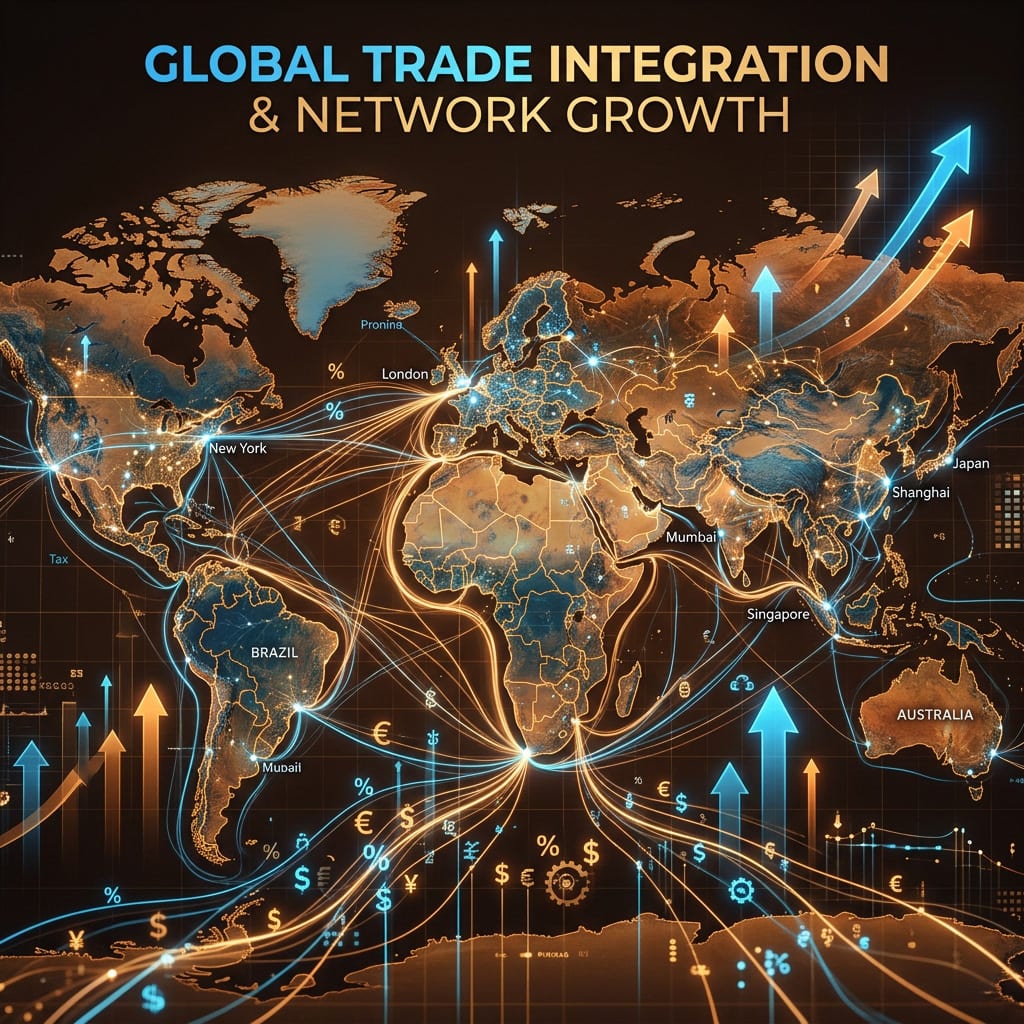
AfCFTA and VAT Digitization: Navigating Africa's E-Invoicing Future
The African Continental Free Trade Area (AfCFTA) is reshaping economic integration across the continent, while simultaneous VAT digitization efforts pose both challenges and opportunities for harmonizing indirect tax regimes.
AfCFTA's Scope and Digital Trade Challenges
The AfCFTA, operational since January 2021, encompasses 54 of Africa's 55 countries, making it the world's largest free trade area by participant count. Central to its implementation is the harmonization of divergent indirect tax systems, including VAT, customs duties, and digital services taxes. However, significant disparities in digital infrastructure maturity across member states complicate this effort.
Key unresolved issues include VAT treatment for cross-border digital services, affecting both B2B and B2C transactions. Ongoing AfCFTA negotiations on digital trade protocols aim to address these complexities, though progress remains incremental.
National E-Invoicing Mandates and Regional Coordination
Several AfCFTA member states have independently advanced mandatory e-invoicing systems. Kenya's Electronic Tax Invoice Management System (eTIMS), administered by the Kenya Revenue Authority, has been progressively mandated for VAT-registered taxpayers since 2022. Egypt introduced mandatory e-invoicing in 2020, initially targeting large taxpayers before extending requirements to SMEs. Nigeria's Federal Inland Revenue Service has piloted e-invoicing capabilities through its TaxPro-Max platform, while South Africa's SARS continues VAT administration modernization via digital channels.
The African Tax Administration Forum (ATAF) provides critical coordination, publishing guidance on digital taxation and supporting member tax authorities in adopting best practices aligned with OECD frameworks. Additionally, the IMF and World Bank have offered technical assistance to multiple African revenue authorities on VAT gap reduction and e-invoicing readiness.
Related articles

AfCFTA and APAC E-Invoicing Models: Converging Paths in Digital Trade
African policymakers are closely examining APAC e-invoicing models like India's GST mandate and Singapore's InvoiceNow network as they advance AfCFTA's digital trade infrastructure, aiming to harmonize cross-border compliance frameworks.

UK Confirms 2029 Mandate for Peppol-Based E-Invoicing, Deferring Real-Time Reporting
The UK's 2029 e-invoicing mandate, leveraging the Peppol network and deferring real-time reporting, provides clear implementation pathways for businesses while signalling future digital reporting obligations.

EU VAT Reform Enters Final Phase with ViDA Adoption
The EU's VAT in the Digital Age initiative, reaching political agreement in November 2024 and facing formal adoption in early 2025, represents the most significant VAT reform since 2006, mandating e-invoicing and real-time reporting for intra-EU B2B transactions by 2030, while expanding the One Stop Shop system.